Blanking Tools
Precision blanking dies for cost-efficient forming processes
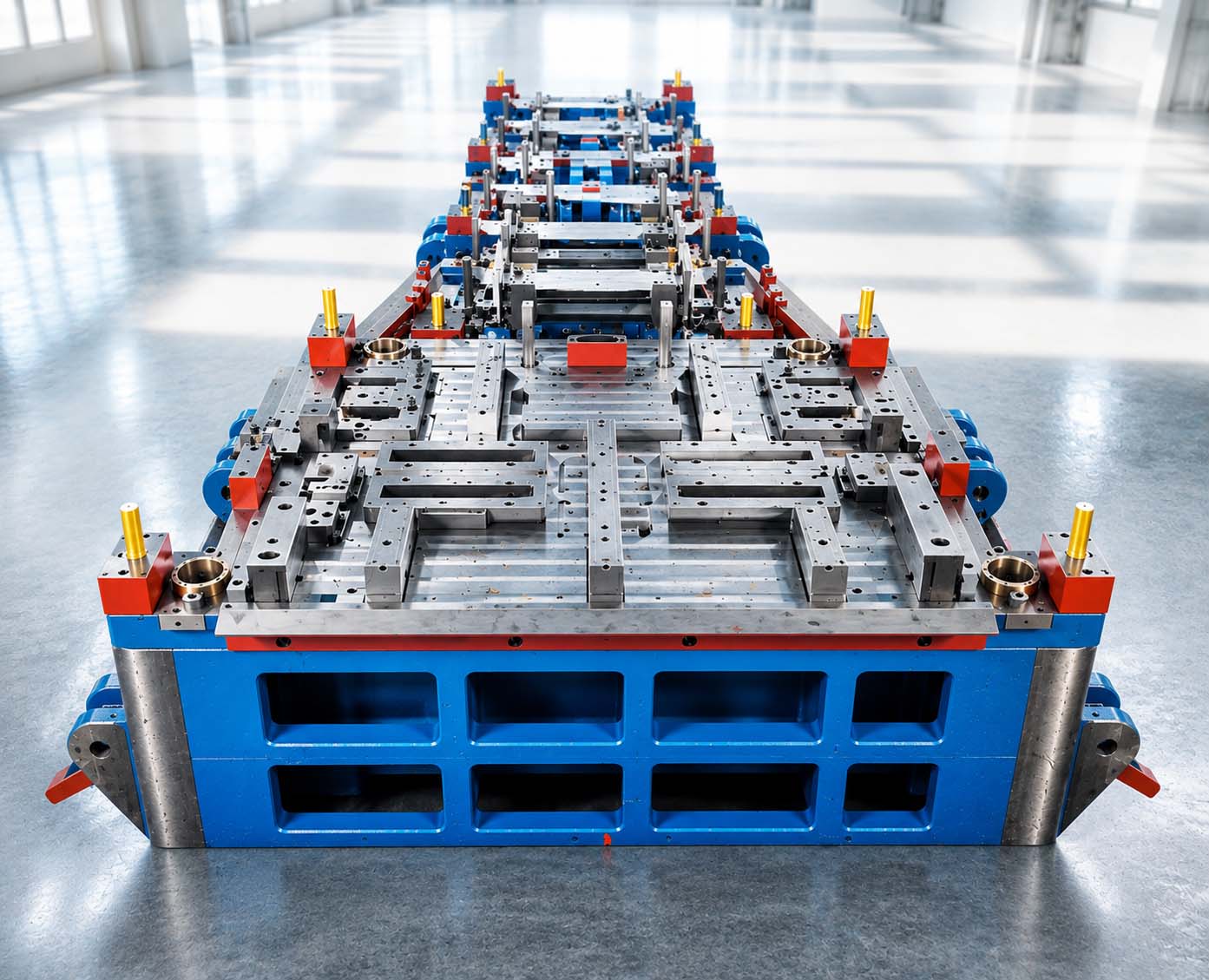
Blank cutting is the first and decisive step in the production of high-quality formed parts. At this early stage of the process, the foundation is already laid for the quality, dimensional accuracy, and cost-efficiency of the entire production chain. Precisely cut blanks ensure stable material flow, reduce scrap, and create the basis for efficient forming processes — from the first forming stage through to the finished component.
As a specialist in toolmaking and forming technology, weba develops and manufactures high-precision blanking dies and tools for demanding applications. Our solutions are used in particular in the automotive, commercial vehicle technology and agricultural as well as other industrial sectors where maximum precision and process reliability are essential.
With decades of experience, state-of-the-art manufacturing technologies, and extensive expertise in processing high-strength materials, weba creates blanking dies that deliver outstanding cutting quality, long tool life, and maximum process stability. This provides the foundation for efficient, cost-effective, and reliable series production.
Are you looking for a partner for precision blanking dies? Contact us — we will be happy to advise you.
EVERYTHING FROM A SINGLE SOURCE
From the initial component idea and tool development through to series production, we support our customers with technical expertise, a high level of vertical integration, and a clear focus on cost-efficiency and quality.
Designed for High-Strength Materials
Our blanking dies are specially designed for processing high-strength and ultra-high-strength steels as well as other demanding materials. As early as the development phase, we take the requirements of the downstream forming processes into account to ensure optimal cutting quality and process reliability.
Part and Process Optimization
Close collaboration between development, design, toolmaking, and production results in blanking dies that are optimally tailored to the respective part and the entire manufacturing process. The result: stable processes, high repeatability, and cost-efficient series production.
Optimized Material Utilization
With intelligent cutting concepts and precise tool design, we reduce material waste and improve material utilization. This enables our blanking dies to contribute to greater cost-efficiency, resource-saving manufacturing, and more sustainable production.
Long Tool Life and Process Reliability
Thanks to high-quality tool steels, precision manufacturing, and a design tailored to the specific application, our blanking dies offer long tool life and high process stability. This reduces maintenance effort and unplanned downtime while ensuring cost-efficient and reliable series production.
COST-EFFICIENT BLANKING DIES THROUGH STANDARDIZED CONCEPTS
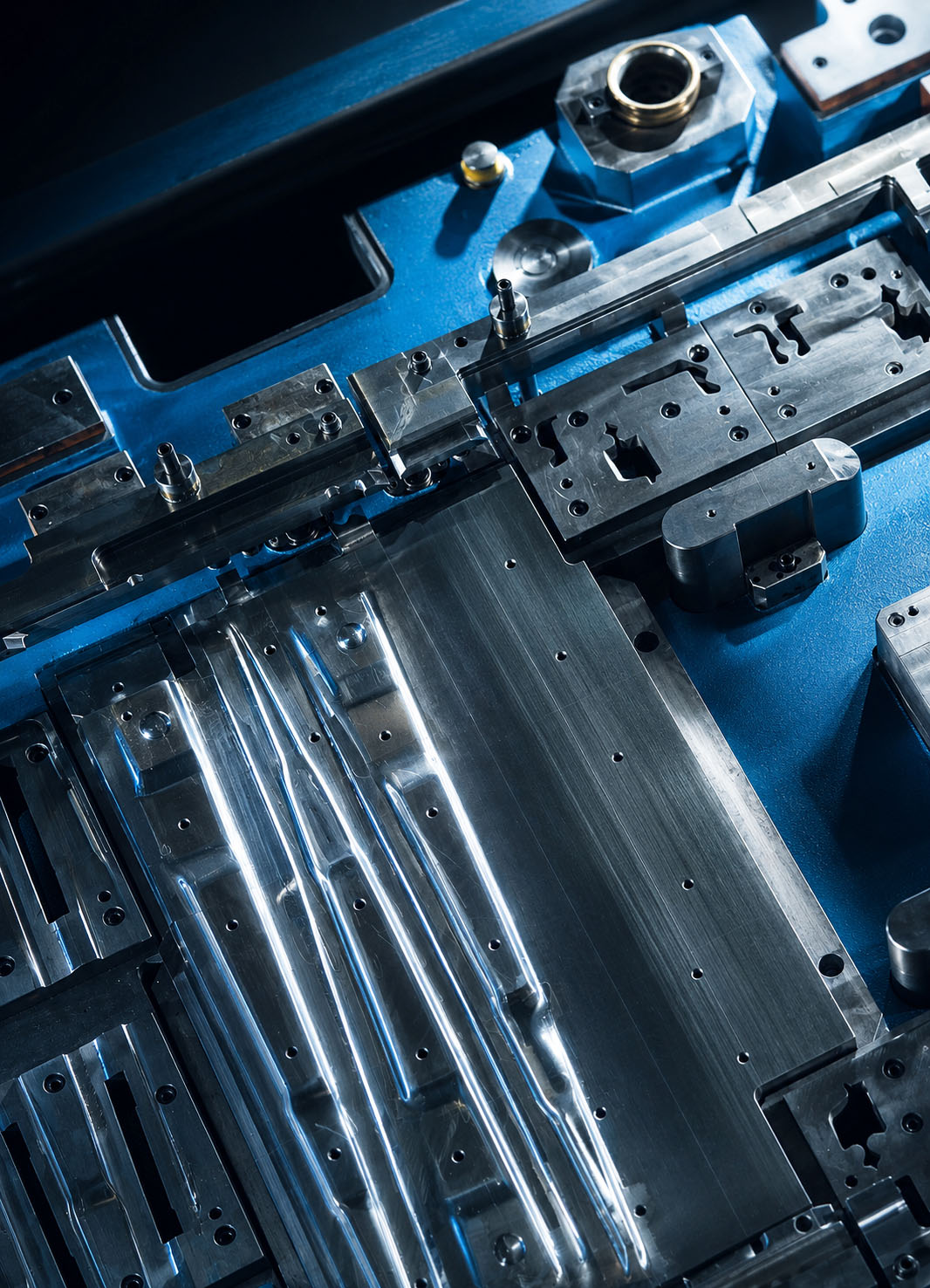
At weba, the development and manufacture of blanking dies are based on standardized design and manufacturing processes as well as the highest quality standards. With proven tool concepts, we create the foundation for effective solutions, short lead times, and efficient series production.
Our many years of experience in toolmaking and cold forming enable us to design blanking dies precisely according to our customers’ requirements. Standardized components and optimized manufacturing processes shorten development and production times, and at the same time ensure maximum precision, long tool life, and reliable process stability in series production.
FAQS ON BLANKING DIES
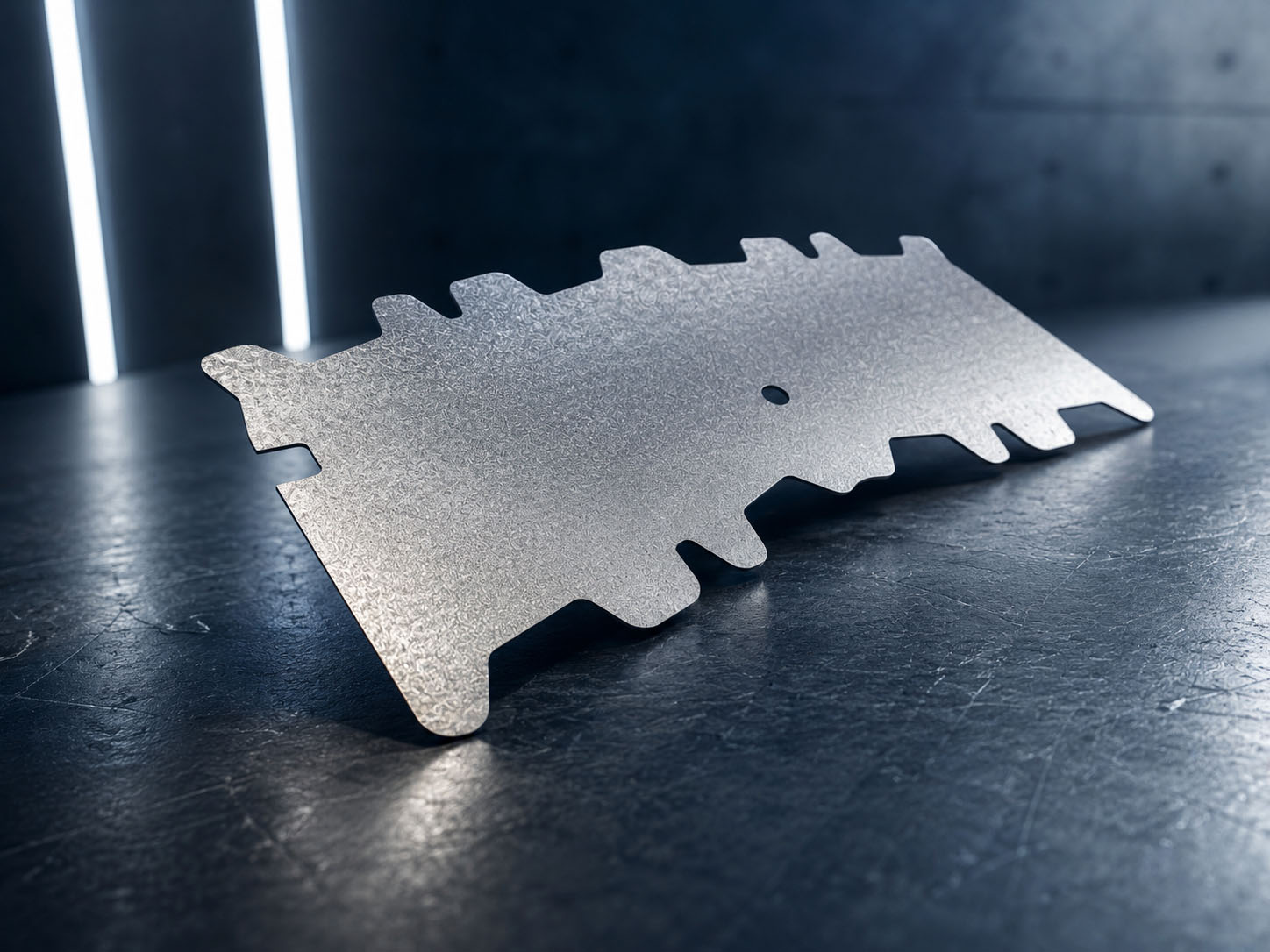
Shaped blanks are precisely cut sheet metal blanks that serve as the starting material for downstream forming, stamping, pressing, or welding processes. The quality of the shaped blanks has a significant impact on the dimensional accuracy, process reliability, and cost-effectiveness of the entire production process.
A precision shaped blank ensures:
- exact geometries
- reproducible production conditions
- tight tolerances
- optimal material utilization
- reduced scrap rates
- stable forming processes
Especially when processing high-strength and ultra-high-strength steels, the quality of the blank plays a decisive role in the final component quality.
Shaped blanks are produced by precisely cutting an individual blank geometry from sheet metal sheets or coil material using blanking dies. Unlike rectangular blanks, shaped blanks are precisely adapted to the subsequent part geometry and downstream forming process.
This optimizes material flow during forming, reduces material waste, and ensures consistently high part quality. Precision-manufactured shaped blanks therefore form the basis for cost-effective, process-reliable, and efficient series production.
A blanking die, also referred to as a blanking tool, is a precision tool used to produce blank cuts or shaped blanks from sheet metal. The cut blanks serve as the starting material for downstream forming, stamping, pressing, or welding processes.
Blanking dies are individually designed according to the material, material thickness, and part geometry, ensuring high dimensional accuracy, repeatability, and process reliability.
A blanking die cuts blanks or shaped blanks from sheet metal sheets or coil material with high precision. The cutting punches and cutting dies are precisely aligned with each other to achieve clean cut edges and tight tolerances.
The quality of the blank cut forms the basis for stable forming processes, optimal material utilization, and cost-effective series production.
Blank geometry is developed based on the final part geometry and the requirements of the forming process. Using engineering expertise, simulations, and many years of experience, the shape, size, and material distribution of the blank are optimized to achieve uniform forming, high part quality, and optimal material utilization. The aim is to reduce material waste while ensuring a process-reliable and cost-effective manufacturing sequence.
High-precision blanking dies enable dimensionally accurate blank cuts and ensure reproducible manufacturing processes. They reduce material waste, increase process reliability, and contribute to consistently high part quality. Thanks to optimal tool design, setup times can also be reduced, tool life extended, and production costs sustainably lowered — decisive advantages for efficient and cost-effective series production.
Shaped blanks, or blanks, are used wherever sheet metal parts are further processed. Typical areas of application include the automotive industry, commercial vehicle technology, agricultural technology, as well as mechanical and plant engineering.
Examples include:
Automotive
- structural parts
- body parts
- reinforcements
- safety-related parts
Commercial vehicles
- chassis parts
- structural parts
- reinforcement elements
Agricultural technology
- highly stressed parts
- structural parts
Mechanical and plant engineering
- special-purpose parts
- machine parts
- customized customer solutions
The quality of the shaped blank has a direct impact on all downstream manufacturing steps. Dimensional deviations or insufficient cut edge quality can negatively affect forming, increase tool wear, and lead to scrap.
High-precision blanking dies enable shaped blanks with maximum dimensional accuracy and create the basis for:
- improved forming results
- lower material stresses
- reduced tool load
- higher process stability
- less scrap
- lower production costs
High-quality blanking dies enable precise cutting of shaped blanks with high repeatability and optimal material utilization. They increase process reliability, reduce tool wear, and create the basis for cost-effective series production.
Blanking dies from weba are designed for a wide range of materials. These include, in particular, high-strength and ultra-high-strength steels, as well as aluminium and other materials for demanding forming processes.
Optimized blank geometry and intelligent cutting concepts reduce material usage and minimize waste. This lowers material costs and improves resource efficiency.
Blanks form the basis of every forming process. The shape, size, and quality of the blank have a significant impact on material flow, part quality, and the cost-effectiveness of the downstream manufacturing steps.
A blank is the cut sheet metal raw part before further processing. The finished part is only created through forming, stamping, welding, or additional processing steps.
Blank geometry is developed based on the final part geometry and the requirements of the forming process. The aim is to achieve optimal material distribution during forming and cost-effective material utilization.
The costs depend, among other things, on the material, material thickness, part geometry, production volume, and tool design. High material utilization and optimally designed blanking tools make a decisive contribution to cost efficiency.
Yes. In addition to high-volume production, weba also manufactures blanking tools for prototypes, pre-series, and small series. This allows parts to be tested under real production conditions at an early stage of development.
Blanking tools must meet high requirements in terms of dimensional accuracy, cut edge quality, repeatability, and process reliability. This is the only way to ensure stable downstream processes and reliable series production.